


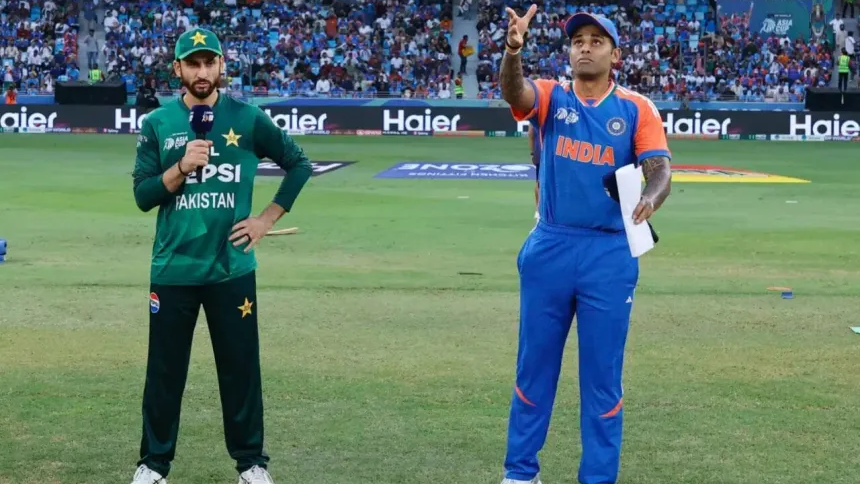
The international cricket calendar is often viewed as a series of athletic contests, but the upcoming India-Pak T20 World Cup fixture in Colombo has evolved into a high-stakes geopolitical drama that transcends the boundaries of the pitch. As the Bangladesh Cricket Board (BCB) chief, Aminul Islam, prepares to descend upon the Sri Lankan capital, the atmosphere is thick with the scent of an impending administrative reset that could define the regional power dynamics for a decade. This is not merely a scheduled check-in for a tournament official; it is a critical peace mission designed to thaw the frozen relations between Dhaka and the Board of Control for Cricket in India (BCCI) following a month of unprecedented administrative warfare.
The Catalyst of Discord: A Pacer, a Contract, and a Continental Crisis
The road to the current standoff began not in a stadium, but in a boardroom where the BCCI reportedly issued an directive that sent shockwaves through the Bangladeshi cricketing community. By instructing the Kolkata Knight Riders to release their premier pacer, Mustafizur Rahman, citing vague “developments all around,” the Indian board inadvertently lit a fuse that would eventually threaten the stability of the entire India-Pak T20 World Cup. This move was widely interpreted in Dhaka as a political response to internal civil unrest and reports of violence, leading to a defensive posture from the BCB that quickly escalated into a full-scale withdrawal from the Indian leg of the tournament.
When the BCB formally communicated its refusal to travel to India, citing a “security liability” for its players, it forced the International Cricket Council (ICC) into a corner it had not occupied since the early days of the pandemic. Despite an independent assessment characterizing the threat as low to moderate, the BCB remained steadfast in its decision, leading to their immediate replacement by Scotland in the tournament roster. This exclusion created a vacuum of solidarity that the Pakistan government was quick to fill, announcing its own boycott of the marquee India-Pak T20 World Cup clash in Colombo as an expression of brotherhood with their Bangladeshi neighbors.
The Asian Five Alliance: A New Power Block in World Cricket
The upcoming “ice-breaker” meeting in Colombo marks the formal debut of the “Asian Five”—a strategic alignment between India, Pakistan, Sri Lanka, Bangladesh, and Afghanistan. Aminul Islam’s vision for this gathering is to ensure that these major stakeholders watch the India-Pak T20 World Cup together, talk to one another, and present a united front within the ICC governance structure. This move is seen as a way to prevent future “double standards” where regional concerns are overlooked by the global body in favor of Western interests.
Writing the Future in Ink: The MoU that Casts Promises in Stone
One of the most significant insights from Aminul Islam’s recent statements is the move toward a formal, line-by-line Memorandum of Understanding (MoU) with the ICC. In the volatile world of subcontinental cricket, verbal agreements are often as stable as a shifting pitch, and the BCB is determined to ensure that the assurances given in Lahore are legally binding. This document will cover everything from future hosting rights to compensation for the 2026 withdrawal, providing a roadmap for stability leading up to the 2031 World Cup, which Bangladesh will co-host with India.
This MoU is being modelled after a similar tactic used during the Asian Cricket Council (ACC) meeting in Dhaka, which prevented members from deviating from agreed contracts during previous disputes. For the India-Pak T20 World Cup to truly be a success, the ICC recognizes that it must assuage the feelings of the BCB and their 200 million passionate fans. By securing these commitments in writing, the BCB is protecting its financial future while allowing the tournament to proceed without the shadow of a forfeit. The “Colombo Ice-Breaker” is thus the final step in a process of reconciliation that transforms a moment of crisis into a precedent for cooperative governance within the global cricket ecosystem.
Official International Cricket Council (ICC) Website : https://www.icc-cricket.com/index
The Specter of the Handshake: Lingering Tensions in the Super 8s
While the immediate crisis of the India-Pak T20 World Cup boycott has been resolved, deep-seated animosities continue to simmer beneath the surface. Many analysts point to the “handshake drama” of the 2025 Asia Cup—where Indian players refused to engage with their Pakistani counterparts following a terror attack—as the psychological baseline for the current tensions. Furthermore, the bizarre “trophy theft” incident involving PCB chief Mohsin Naqvi has left a lingering sense of administrative absurdity that the “Asian Five” meeting will have to address directly. This is the most practical T20 World Cup 2026 Points Table https://www.espncricinfo.com as fans are closely tracking how the recent wins by India and Pakistan affect their path to the next round.
High-Value FAQ for the India-Pak T20 World Cup
Q1: Why was the India-Pak T20 World Cup match in Colombo under threat of boycott? The fixture faced a boycott threat because the Pakistan government initially decided to stand in solidarity with Bangladesh. The BCB had withdrawn from the tournament after the ICC rejected their request to move matches out of India due to security concerns, which was sparked by the BCCI’s directive to release a Bangladeshi player from the IPL.
Q2: What was the outcome of BCB chief Aminul Islam’s emergency meetings in Lahore? Aminul Islam played a pivotal role in persuading Pakistan to withdraw their boycott call by highlighting the damage it would cause to the global cricket ecosystem. This led to a U-turn by the Pakistan government and an agreement that Bangladesh would receive future hosting rights and no financial penalties for their non-participation.
Q3: What is the “Asian Five” meeting scheduled to take place during the match? The “Asian Five” is a diplomatic summit in Colombo involving representatives from India, Pakistan, Sri Lanka, Bangladesh, and Afghanistan. Orchestrated by the ICC and Aminul Islam, the goal is to foster regional unity, finalize a formal MoU regarding future tournament cycles, and resolve lingering tensions between the BCCI and BCB.