


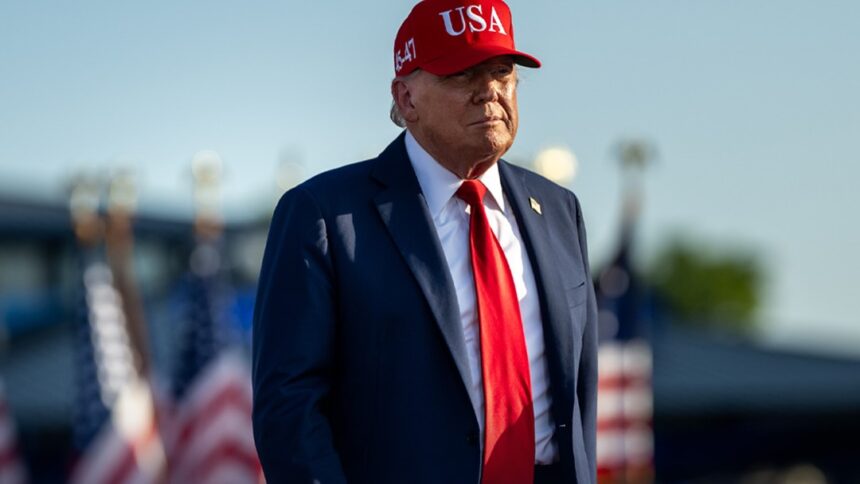
In February 2026, the US Supreme Court struck down President Trump’s global tariffs, ruling the use of the International Emergency Economic Powers Act (IEEPA) illegal. With over $130 billion in Trump tariff refunds at stake, US Trade Representative Jamieson Greer signaled a lengthy legal battle, stating the courts “created the situation.”
The Hidden Truth Behind the $130 Billion Refund Battle
The global trade landscape was thrown into absolute disarray following a landmark 6-3 Supreme Court decision that declared the administration’s use of the International Emergency Economic Powers Act (IEEPA) to levy tariffs as unconstitutional. This ruling effectively stripped the executive branch of its power to tax imports under the guise of a national emergency, a move the court insisted belongs solely to Congress. Consequently, the legal basis for billions of dollars in collected revenue has evaporated overnight, leaving the US Treasury facing a potential exodus of funds that could widen the national fiscal deficit significantly. Chief Justice John Roberts noted that the law contains no reference to duties, making the administration’s “extraordinary power” claim legally baseless.
Legal experts warn that the road to recovery for these businesses will be anything but straightforward or swift. The administration has signaled a strategy of “litigious resistance,” implying that they will fight individual refund claims in court for years to avoid a massive lump-sum payout. This creates a high-stakes environment where only companies with the resources to sustain long-term legal battles may see their money returned. Meanwhile, the Customs and Border Protection agency is caught in the middle, currently facing a funding impasse and awaiting specific directives on whether to automate these Trump tariff refunds or continue holding the funds until every legal appeal is exhausted.
Global & Local Impact: A New Dawn for Indian Exporters
The prospect of Trump tariff refunds is particularly enticing for Indian firms that have already paid millions in duties to maintain their presence in the American market. Many Indian exporters operate on thin margins, and the recovery of these taxes could mean the difference between expansion and stagnation. Analysts suggest that if these refunds are processed, we could see a relief rally in Indian markets, particularly for companies heavily reliant on US consumer demand. GIFT Nifty has already climbed over 250 points in response to the news. However, the uncertainty regarding the “interim trade deal” remains, as President Trump insists the deal is still “on” even if the legal mechanisms for his leverage have been temporarily dismantled by the bench.
The Hidden Reality of Official Reactions & Statements
The reaction from Washington has been one of defiant frustration, with President Trump describing the court’s decision as “deeply disappointing” and a threat to national economic leverage. US trade chief Jamieson Greer emphasized that while the legal tools might change, the underlying policy of aggressive “America First” trade remains untouched. He pointed out that the courts “created the situation” by striking down the tariffs without addressing the mechanics of the billions already collected. This sets the stage for a period of extreme administrative friction where the executive branch may use every procedural hurdle available to delay the issuance of Trump tariff refunds.
Tech-Logic: The Economic Infrastructure of Tariff Recovery
Without a blanket “re-liquidation” order, each importer must manually file “protests” within a strict 180-day window following the official liquidation of their entries. This creates a massive data processing bottleneck that could take years to clear. Furthermore, the economic logic of the administration’s resistance is tied to the US fiscal deficit. Issuing over $130 billion in Trump tariff refunds simultaneously would create a sudden revenue hole that the Treasury is desperate to avoid. Consequently, we are Explore our deep dive into the 2026 Global Trade Outlook seeing a strategic use of “legal tech” where the government utilizes procedural complexity to slow down the outflow of cash, effectively turning a clear-cut judicial ruling into a marathon of administrative endurance.
FAQs
Q1: Why did the Supreme Court declare the Trump tariffs illegal?
The Court ruled 6-3 that the International Emergency Economic Powers Act (IEEPA) does not give the President the authority to impose broad, permanent tariffs. The justices stated that the power to tax and levy duties is a core legislative function reserved for the US Congress under Article I of the Constitution, and the executive branch exceeded its statutory limits by using “emergency” language for general trade policy.
Q2: How can businesses claim their Trump tariff refunds?
Importers must identify all entries subject to IEEPA duties and monitor their liquidation status. To preserve their rights, companies are advised to file “protective protests” or lawsuits through the Court of International Trade. US Customs has yet to provide a “blanket” refund mechanism, meaning individual legal action may be required to secure Trump tariff refunds for duties already paid.
Q3: How does this ruling affect Indian exporters specifically?
The ruling is a major win for India as the reciprocal tariffs previously imposed under IEEPA are now legally invalid. This could free about 55% of India’s exports from the 18% duty burden. While a new 15% global surcharge has been proposed under Section 122, the immediate removal of IEEPA duties provides a competitive boost and the possibility of recovering past duty payments.