


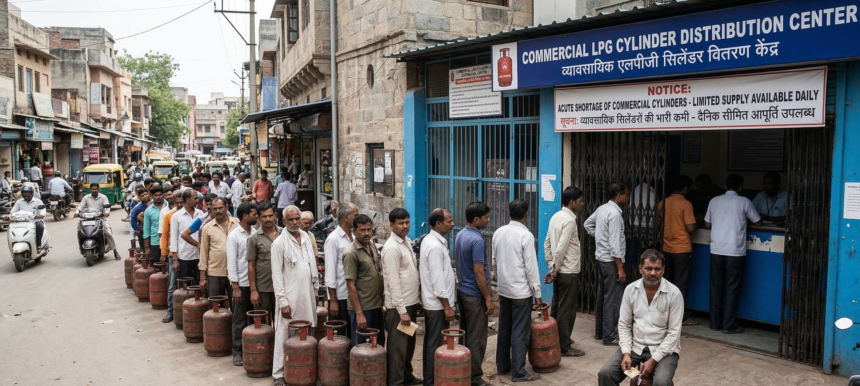
India’s hospitality industry is currently grappling with a severe commercial LPG cylinder shortage triggered by logistics bottlenecks and inventory deficits. For investors, this signals short-term margin pressure on restaurant chains and hotels. For career seekers, logistics and supply chain management roles in the energy sector are seeing unprecedented demand to solve this crisis.
Market Analysis & Current Trends
The sudden LPG cylinder shortage has sent shockwaves through India’s HoReCa (Hotel, Restaurant, and Cafe) sector. This crisis is largely attributed to a mismatch between seasonal demand spikes and secondary distribution failures within Oil Marketing Companies (OMCs). Unlike domestic LPG, which remains subsidized and prioritized, commercial supply is subject to market volatility.
Currently, we are seeing a trend of “energy pivoting,” where large-scale industrial kitchens are exploring piped natural gas (PNG) as a more stable alternative. However, the immediate impact is a rise in operational costs for small and medium enterprises (SMEs), as many are forced to purchase gas at premium rates or reduce operating hours.
Financial Data & Business Impact Breakdown
The following table illustrates the current financial strain on commercial entities compared to the previous fiscal quarter (Q3 2025).
| Metric | Q3 2025 (Average) | Current Crisis (Q4 2026) | % Change |
| Commercial LPG Price (19kg) | ₹1,750 – ₹1,850 | ₹2,100 – ₹2,300 | +20% |
| Wait-time for Delivery | 24 – 48 Hours | 5 – 7 Days | +150% |
| Operational Cost (HoReCa) | 12% of Revenue | 18% of Revenue | +6% |
| Alternative Fuel Interest | Moderate | High (PNG/Electric) | +45% |
Expert Future Outlook & Revenue Estimates
Economists at Savitimes on LPG cylinder shortage anticipate that while the supply crunch OF LPG cylinder shortage may ease within the next 30 to 45 days as OMCs recalibrate their inventory, the financial “after-shocks” will linger. We project a 3-5% contraction in the quarterly earnings of listed restaurant groups if the shortage persists through the wedding and festival season.
From a career perspective, the LPG cylinder shortage has highlighted a massive gap in Last-Mile Energy Logistics. We estimate a 15% growth in job openings for Supply Chain Analysts and Energy Procurement Specialists in the coming year. Salaries for these roles in the energy sector are expected to rise by 12-18% as companies prioritize “crisis-proofing” their distribution networks.
Tech-Logic: Industrial Infrastructure
The current system relies LPG cylinder shortage on decentralized bottling plants and truck-based distribution. This infrastructure is “latency-prone”—any disruption in the primary transport (rail/ship) causes an immediate cascading failure at the retail level. To mitigate this, the industry is looking toward IoT-enabled Smart Meters for cylinders. These systems use predictive logic to alert distributors before a cylinder is empty, allowing for a “Just-in-Time” (JIT) delivery model that could reduce the severity of future shortages. For those looking for career stability, the Ministry of Petroleum and Natural Gas offers insights into the long-term policy shifts intended to prevent such deficits. Meanwhile, internal stakeholders can refer to our Savitimes Business Analysis on Energy Trends to understand how these price hikes might influence consumer inflation in the coming months.
The Hidden Truth Behind the Escalating Energy Supply Bottlenecks
A deep dive into the industrial data reveals that the LPG cylinder shortage is being exacerbated by a lack of specialized transport vessels and a shortage of laborers at key bottling plants. Financial analysts have observed that while international crude prices have remained relatively stable, the localized “last-mile” delivery infrastructure has crumbled under the weight of outdated logistical software. This
FAQs:
- Why is there a commercial LPG shortage? Logistics bottlenecks and inventory management issues at OMCs are the primary causes.
- How much has the price of commercial LPG increased? Prices have surged by approximately 20% in the current quarter.
- Will this affect domestic gas supply? Currently, the crisis is localized to commercial 19kg and 47kg cylinders; domestic supply remains stable.
- What is the best career path in this sector? Supply Chain Management and Energy Procurement are currently high-demand roles.
- Is PNG a viable alternative? Yes, piped natural gas offers better price stability but requires high initial infrastructure investment.