


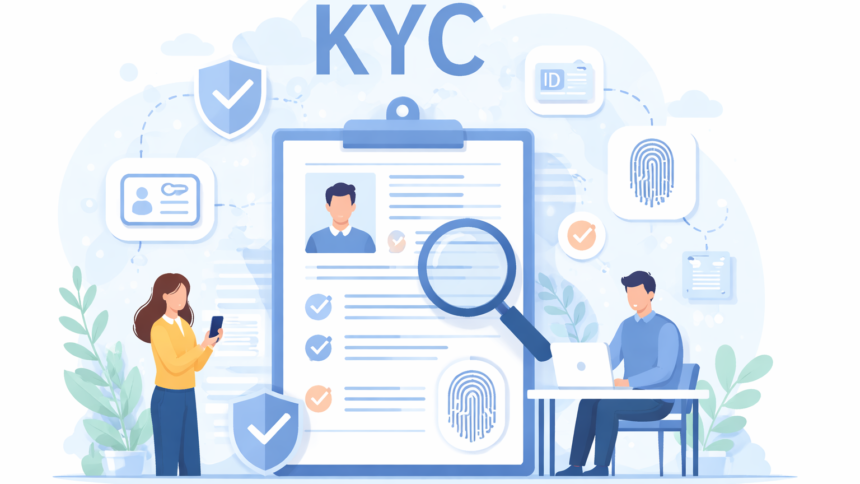
India’s financial landscape is undergoing a massive shift as the Central Know Your Customer CKYC registry attempts to eliminate redundant identity verification. Spearheaded by CERSAI and backed by major regulators like RBI and SEBI, the move aims to streamline onboarding for millions. However, institutional friction remains a significant hurdle.
The evolution of India’s Digital Public Infrastructure (DPI) has reached a critical juncture with the 5 CKYC Disruptions targeting the elimination of manual duplication. For C-suite executives and global investors, this transition represents a pivot from fragmented compliance to a unified data architecture. While Aadhaar and UPI revolutionized access and payments, the CKYC registry is designed to be the final layer of interoperability.
The Architecture of Trust: What is CKYC?
At its core, the Central Know Your Customer (CKYC) initiative is a centralized repository of the KYC records of customers in the financial sector with uniform KYC norms and inter-usability. Managed by CERSAI, this system was designed to host the 5 CKYC Disruptions that allow a consumer to complete their verification once and use it across banks, mutual funds, and insurance providers. By generating a unique 14-digit identifier, the system seeks to digitize the very foundation of financial trust.
To understand more about the evolving regulatory landscape in India, visit our Finance and Regulatory Category to see how these changes affect your investments. For a global perspective on anti-money laundering standards, refer to the latest guidelines by the Financial Action Task Force (FATF).
Institutional Mandates: Why is KYC Needed Everywhere?
The ubiquity of verification is not a choice but a global regulatory requirement. The 5 CKYC Disruptions are rooted in the need for stringent Anti-Money Laundering (AML) and Combating the Financing of Terrorism (CFT) measures. Regulatory bodies like the RBI and SEBI mandate that every entry point into the formal economy—be it a digital wallet, a demat account, or a simple savings scheme—must be verified to ensure the legitimacy of the capital flow.
Furthermore, the expansion of the digital economy has increased the “surface area” for potential fraud. The 5 CKYC Disruptions act as a gatekeeping protocol that protects the integrity of the sovereign economy. By requiring KYC at every touchpoint, the government creates a traceable audit trail that discourages “mule accounts” and shell entities. This pervasive verification is the price of a secure, transparent, and globally respected financial ecosystem.
The Friction Point: Why Indians are Frustrated with Repetition
Despite the promise of a “once-and-done” system, the average Indian consumer remains trapped in a loop of repetitive uploads. The primary source of frustration stems from the lack of interoperability between different regulatory silos. For instance, a bank might not always accept the CKYC record updated by a stockbroker. This disconnect negates the efficiency of the 5 CKYC Disruptions, forcing users to undergo the same biometric or document-based verification multiple times.
This “KYC fatigue” is exacerbated by the technical glitches in the central registry and the hesitation of banks to trust third-party data. Many institutions, fearing regulatory penalties, prefer to conduct their own independent due diligence rather than relying on a CKYC fetch. This conservative approach effectively stalls the 5 CKYC Disruptions, leaving the consumer to navigate a sea of redundant paperwork and digital forms that seem to never end.
Data Sovereignty: The Role of DigiLocker and Aadhaar
To understand the full scope of the 5 CKYC Disruptions, one must look at the synergy between CERSAI, DigiLocker, and Aadhaar. DigiLocker serves as the “digital vault” where users store verified documents, while Aadhaar provides the biometric “key.” When these systems are integrated with the CKYC registry, the result is a powerful verification engine that can theoretically onboard a user in under sixty seconds.
However, legal challenges regarding Aadhaar’s use by private entities have created a fragmented landscape. The 5 CKYC Disruptions must navigate these legal hurdles by offering alternative “Offline XML” methods or Virtual IDs.
Future Roadmap: Moving Toward “KYC on the Fly”
The ultimate goal of the 5 CKYC Disruptions is to transition from a static record-holding system to a dynamic “KYC on the Fly” model. In this future, your identity is not something you “provide,” but something that is “verified” in the background through secure APIs. This would mean that moving your capital from a savings account to a high-yield mutual fund would require zero additional paperwork, as your identity token remains active and valid across the entire network.
Business FAQs
Is it a good investment?
Investing in fintech infrastructure that leverages the 5 CKYC Disruptions is highly viable. Companies that provide integration APIs or middleware for CKYC-to-institutional databases are positioned for high growth as regulatory compliance becomes more centralized.
Who is the target demographic?
The target demographic includes the 400+ million Indian citizens currently active in the formal financial system who face “KYC fatigue.” Additionally, it targets young, tech-savvy Gen Z consumers who demand instantaneous service without paperwork.
What is the 5-year outlook?
The 5-year outlook predicts a fully interoperable ecosystem where a single KYC update in a bank automatically reflects in a user’s insurance and mutual fund portfolios. The 5 CKYC Disruptions will likely become the global blueprint for emerging markets.