

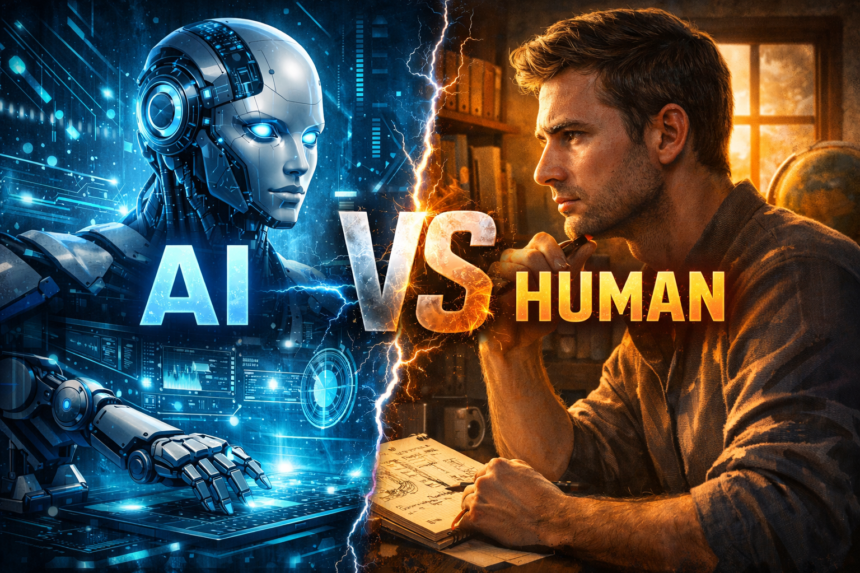
Artificial intelligence models gain the capacity to generate art in the iconic Studio Ghibli style or clone the vocal timbres of legendary performers like Mohammed Rafi, the foundational definition of creativity is undergoing a rigorous interrogation . This transition is not merely a technological advancement but a systemic reconfiguration of how we assign value to human thought and labor. In the contemporary landscape, a critical question emerges: is artificial intelligence the final disruptor of the artist, or does it serve as a mirror reflecting the mechanical nature of human creative conditioning?
The emergence of AI-driven synthesis tools has exposed a significant vulnerability in industries that have historically relied on formulaic production. Within the context of Bollywood, creators who have traditionally employed a “copy-paste” methodology—relying heavily on existing narrative templates—now find themselves in direct competition with algorithms that perform such functions with superior speed and efficiency. This evolution suggests that the current tension is not a physical “war” but an optimization of the creative process where the human element is being forced to migrate toward higher orders of authenticity. The following analysis provides an exhaustive look at the mechanisms of mimicry, the labor dynamics of resistance, and the strategic integration of technology in the ongoing AI vs Humans Battle.
The Illusion of Originality and the Mental Kaleidoscope
To understand if humans have truly lost the ground in the AI vs Humans Battle, we must analyze the nature of human creativity from a philosophical perspective. Jiddu Krishnamurti argued that the human mind is “conditioned” by fear, pleasure, and tradition, functioning much like a mechanical system. He posited that thought is always mechanical, a repetitive pursuit that accepts any “groove” or pattern that offers security. In this framework, the human creator who follows a formula for a hit song or a movie is essentially operating on an algorithmic level. The AI, therefore, is not a new kind of threat but a more efficient version of the same mechanical process that has always characterized the “half-alive” human mind.
Mark Twain’s metaphor of the “mental kaleidoscope” further illuminates this reality by stating that there is no such thing as a new idea. He famously observed that we simply take a lot of old ideas and put them into a sort of mental kaleidoscope to make new and curious combinations. This is precisely how AI art and content work—they take a vast dataset of existing “colored glass” and give it a turn to produce a new pattern. The “wow factor” of a human artist, in Twain’s view, is simply the uniqueness of their individual kaleidoscope, influenced by their personal travel, music, and food experiences. As AI automates these mechanical combinations, it forces the human mind to either confront its own conditioning or to find beauty in abandonment and true austerity .
Bollywood’s Data Squeeze and the Remake Culture
The history of cinema, particularly in the Indian subcontinent, provides a vital context for understanding the current anxiety regarding AI’s capacity to replicate artistic styles. For decades, the industry has operated on a spectrum between auteur-driven realism and commercial template-driven production. Directors like Anurag Kashyap and Dibakar Banerjee represent a commitment to realism, where storytelling is rooted in deep observation of human behavior. Kashyap’s philosophy, influenced by Vittorio De Sica’s Bicycle Thieves, emphasizes shooting on real locations and allowing actors to improvise—a technique that introduces a level of “human noise” that current AI models struggle to simulate.
In contrast, a significant portion of mainstream Bollywood success has been built upon a legacy of unofficial adaptations. Aamir Khan, often described as a perfectionist, has utilized Hollywood blueprints for some of his most significant works, from Dil Hai Ki Manta Nahin to Ghajini . When Rajamouli adapted Buster Keaton’s Our Hospitality into Maryada Ramanna, he argued that there is a very thin line between copying and adapting. However, since AI now performs this same task—Ghiblifying a meme or a personal photo—the human “adapter” must justify their value against a more efficient algorithmic counterpart in the AI vs Humans Battle .
The UNESCO Recommendation on the Ethics of Artificial Intelligence (2021) and the MONDIACULT 2025 conference emphasize the need for “rights-based governance”. Music creators, for instance, are projected to lose up to 24% of their revenues by 2028 due to generative AI implications, as value is siphoned away from artists and into platforms. To mitigate this, the Irish government and 15 other authorities are enforcing an “opt-out exception,” allowing creators to refuse permission for their work to be used in AI training datasets.
| Governance Entity | Key Policy or Initiative | Primary Objective |
| UNESCO | Ethics of AI Recommendation (2021) | Sector-specific training, supporting local enterprises |
| European Union | EU AI Act (2024) | Mandatory summaries of training content, copyright compliance |
| Irish Writers Union | Stand against Meta | Stronger copyright protections for authors |
| Content Authenticity Initiative | Blockchain-based verification | Digital watermarking to embed creator info |
| MONDIACULT 2025 | International AI Framework | Protecting cultural sovereignty and pluralism |
Survival Guide: Why E-E-A-T is Your Secret Weapon
In the digital marketing landscape, the AI vs Humans Battle is fought on the battlefield of search engine results pages. AI tools like ChatGPT and Grok are being used to generate “professional-grade” content, often outperforming beginners in technical execution . However, search engines continue to prioritize “E-E-A-T” (Experience, Expertise, Authoritativeness, and Trustworthiness), rewarding content that demonstrates a “human touch” and first-hand expertise. Research indicates that while AI can pump out high volumes of content, human writers remain better at finding fresh high-ranking keywords and holding onto search positions over time.
The best approach is not to choose one side but to fully integrate both through a hybrid strategy. This involves using AI for speed and structure—handling the heavy lifting of ideation and outlining—while employing humans for depth and trust. A human can draw on unique experiences with customers, knowing commonly asked questions and what is of most value to the audience. By merging AI’s efficiency with human storytelling and a solid SEO strategy, creators can produce content that both ranks and resonates emotionally with the target demographic.
Upskilling for the Future: The Enterprising Artist’s Path
As AI technology advances faster than the ability of cultural institutions to adapt, the creative industry is moving toward a strategic integration of tools. Dhruv Rathee’s AI Masterclass reflects this educational shift, offering training on over 20 AI tools—from ChatGPT to Midjourney and Runway—to help boost productivity and efficiency. The course highlights how AI can be used for “low-risk acceleration,” such as research synthesis and quick synopses, allowing humans to focus on higher-level strategy. For students and professionals, learning to integrate AI with storytelling is becoming as essential as mastering a basic screenplay format.
As the AI vs Humans Battle moves from creators’ rooms to the halls of government, international bodies are calling for a rights-based approach to ensure automation does not erode cultural diversity Global Governance and Policy You can explore the official framework on the impact of artificial intelligence on artistic freedom here to understand how global leaders are attempting to set limits on corporate control over creativity .
Frequently Asked Questions
Is the AI vs Humans Battle leading to the end of professional artists? While AI can automate technical execution and formulaic production, research suggests it serves as a creative assistant rather than a total replacement. The demand for “human touch” and first-hand expertise remains high in prestige markets, though entry-level technical roles face significant displacement risks from automation.
How did the 2023 Hollywood strike impact the AI vs Humans Battle? The strike established landmark labor protections, requiring informed consent for digital replicas and ensuring that AI-generated content cannot devalue human writing credits. It demonstrated the immense economic leverage of human creative labor, costing the industry $5 billion and forcing a rethink of synthetic integration in major studios.
Can human creativity be truly replicated by the Algorithmic Kaleidoscope? Philosophically, while AI can recombine existing ideas (the “mental kaleidoscope”) with massive efficiency, it currently lacks the “opinion,” “intent,” and “abandonment” that characterize deep human art. True originality, as defined by breaking away from all mechanical conditioning, remains a uniquely biological capability that machines—trained on past data—cannot simulate