


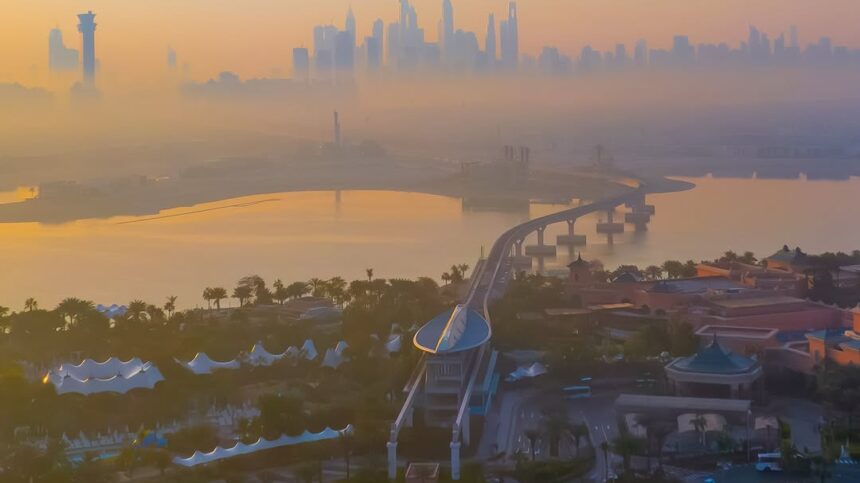
This move marks a historic shift from ground-based congestion to the untapped potential of the third dimension. Unlike traditional helicopters, these advanced electric vertical take-off and landing (eVTOL) vehicles are designed to be quiet, sustainable, and accessible to the general public. The deployment of Dubai’s “Air Taxis” represents a collaborative triumph between government visionaries and private tech giants, ensuring that the city remains at the bleeding edge of the global race for autonomous and electric transportation solutions.
The Secret Partnership: Why Uber is the Key to Your Next Flight
One of the most intriguing aspects of this rollout is the seamless integration of these aerial vehicles into the existing digital ecosystem of the world’s largest ride-hailing giant. Residents and tourists will soon find a “Flight” option within their standard app interface, allowing them to book Dubai’s “Air Taxis” just as easily as they would a standard car. This partnership with Uber ensures that the transition from road to sky is frictionless, leveraging a massive user base and a trusted logistics platform to democratize aerial travel.
The logistical backend of this operation is a marvel of modern software engineering and urban planning. By utilizing Uber’s existing dispatch technology, Dubai’s “Air Taxis” can be synchronized with ground transportation to provide a true door-to-door experience. For instance, a passenger could take a premium electric sedan to a dedicated “Vertiport” and immediately board their flight, bypassing the gridlocked highways that often define peak-hour travel in major global hubs.
The Hidden Engineering Marvels Powering the Dubai Skies
Environmental sustainability is another pillar of this initiative that cannot be overlooked by the global community. Because Dubai’s “Air Taxis” are entirely electric, they produce zero operational emissions, aligning perfectly with the UAE’s broader commitment to a “Net Zero” future. The noise signature of these eVTOLs is significantly lower than that of traditional turbines, meaning they can operate in densely populated residential areas without disrupting the peace and tranquility of the neighborhood.
The Economic Impact of Trading Traffic Jams for Flight Paths
Time is the most valuable commodity in the modern world, and the introduction of Dubai’s “Air Taxis” is essentially a massive time-granting project for the city’s workforce. A commute that currently takes forty-five minutes through the bustling Sheikh Zayed Road could be reduced to a mere ten-minute flight. This drastic reduction in transit time is expected to boost economic productivity by allowing professionals to spend more time in the boardroom or with their families and less time in stagnant traffic.
What the First Passengers Can Expect from the In-Flight Experience
Stepping into one of Dubai’s “Air Taxis” will feel less like boarding a plane and more like entering a premium lounge. The interiors are designed with panoramic windows to provide breathtaking views of the city’s architectural wonders, such as the Museum of the Future and the World Islands. For accurate data you can visit International Civil Aviation Organization UAM Regulations. This scenic element ensures that every trip in Dubai’s “Air Taxis” is both a functional commute and a world-class tourist experience, adding a new dimension to the city’s hospitality sector.
The autonomous and semi-autonomous nature of these flights means that the experience is smooth and highly regulated. While initial flights will likely have a safety pilot on board to satisfy current regulations and public comfort, the ultimate goal for Dubai’s “Air Taxis” is fully autonomous operation. This will allow the cabin to be maximized for passenger comfort, featuring high-speed Wi-Fi and climate-controlled environments that cater to the needs of the discerning modern traveler.
Navigating the Regulatory Clouds and Global Competition
While Dubai is leading the charge, the race to dominate the urban air mobility (UAM) sector is a global one. Cities like Paris, Singapore, and New York are watching closely as the RTA establishes the legal frameworks and safety protocols for Dubai’s “Air Taxis”. The success of this pilot program later this year will serve as a global blueprint, proving that the challenges of air traffic control and public safety can be managed within a high-density urban environment through advanced AI-driven coordination.
| Category | Details & Data |
| Official Launch Date | Late 2026 (Phased commercial rollout) |
| Primary Operator | Joby Aviation (Exclusive 6-year agreement with RTA) |
| Aircraft Model | Joby S4 (Electric Vertical Take-Off & Landing – eVTOL) |
| Passenger Capacity | 4 Passengers + 1 Pilot (Autonomous future planned) |
| Top Speed | 321 km/h (200 mph) |
| Maximum Range | 161 km (100 miles) on a single charge |
| Noise Level | 45–65 dB (Significant quietness compared to helicopters) |
| Estimated Fare | Starting from AED 350 per seat (Route dependent) |
Frequently Asked Questions (FAQs)
How much will it cost to ride in one of Dubai’s “Air Taxis” compared to a normal taxi?
While initial pricing for Dubai’s “Air Taxis” is expected to be at a premium level similar to a high-end limousine service, the long-term goal of the RTA and its partners is to scale the technology until it is comparable to a standard Uber Black ride. The efficiency of electric power and autonomous flight is expected to significantly drive down operational costs over the next five years.
Which areas of the city will be serviced by Dubai’s “Air Taxis” during the initial launch phase?
The first phase of the Dubai’s “Air Taxis” rollout will focus on four strategic locations: Dubai International Airport (DXB), Downtown Dubai, Dubai Marina, and Palm Jumeirah. These hubs were selected because they represent the highest demand for rapid transit and offer the most significant time savings for passengers traveling between key business and tourism districts.
Is it safe to fly in Dubai’s “Air Taxis” during high winds or extreme summer heat?
The aircraft used for Dubai’s “Air Taxis” have been rigorously tested to operate in the specific climatic conditions of the Middle East, including extreme temperatures reaching 50°C. They are equipped with advanced sensors and stabilization systems to handle the unique wind patterns found between skyscrapers, ensuring a stable and secure flight for all passengers.