


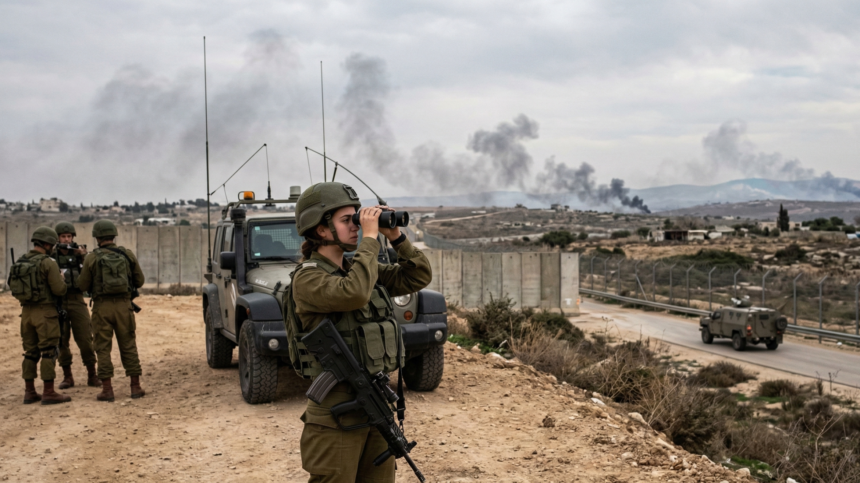
The Indian Ministry of Information and Broadcasting (MIB) has directed the Broadcast Audience Research Council (BARC) to immediately suspend Television Rating Points (TRP) for all news channels for four weeks starting March 6, 2026. This move aims to curb “unwarranted sensationalism” and speculative reporting regarding the escalating Israel-Iran conflict.
Full Event Breakdown: The MIB Directive to BARC
The Indian government’s decision to freeze news ratings comes as a direct response to the deteriorating quality of broadcast journalism during the West Asia crisis. On Friday, March 6, 2026, the Ministry of Information and Broadcasting invoked Clause 24.2 of the 2014 Policy Guidelines for Television Rating Agencies. This clause mandates that agencies like BARC must comply with government orders issued in the interest of public order and responsible broadcasting.
By withholding TRP data, the government is effectively removing the primary incentive for “race-to-the-bottom” journalism. In the Indian media landscape, ad revenue is inextricably linked to weekly viewership metrics. Without these numbers, channels no longer have a financial reason to prioritize high-decibel sensationalism over factual reporting. The suspension is set for an initial period of four weeks, though it may be extended if the “war hysteria” in domestic newsrooms persists.
Global & Local Impact: Why the West Asia War Matters to India
The Israel-Iran Conflict is not merely a distant military engagement for New Delhi; it is a direct threat to India’s economic and social stability. With nearly 10 million Indian nationals living and working in the Gulf region, any escalation in the Middle East puts millions of lives—and the remittances they send home—at significant risk. The Ministry’s decision to halt TRP reporting is a strategic attempt to manage the domestic psychological impact of the war while the government handles the diplomatic and logistical challenges of protecting its diaspora.
Economically, the conflict has already begun to bite. Crude oil prices have seen sharp spikes, and over 180 international flights have been cancelled or rerouted to avoid active combat zones. Indian exporters, particularly those dealing in Basmati rice and pharmaceuticals, report that thousands of tonnes of cargo are currently stranded at ports due to maritime security threats in the Strait of Hormuz. The suspension of news ratings is intended to prevent domestic markets from reacting impulsively to speculative “breaking news” that could further destabilize the Indian Rupee or trigger inflationary hoarding of essential goods.
Official Reactions & Statements
The Ministry of Information and Broadcasting stated that the directive was issued “in the public interest” to ensure that news channels adhere to the Program Code. An official spokesperson noted that while the government respects the freedom of the press, it cannot remain a silent spectator when “sensational and speculative content” causes distress to the families of Indian nationals stuck in conflict zones.
Technical Analysis of the TRP Suspension
When a major event like the Israel-Iran Conflict occurs, newsrooms often use real-time “minute-to-minute” data to see which visual triggers (e.g., missile graphics, countdown timers) keep the audience glued to the screen. This creates a “reinforcement learning” effect where editors are incentivized to produce more extreme content to maintain a high “Time Spent Viewing” (TSV) metric. By pausing the dissemination of this data, the government is essentially “unplugging” the machine that rewards hysteria. This neutralizes the competitive pressure between channels, theoretically allowing for a return to a “Lagan” or baseline style of reporting where the merit of the news, rather than the intensity of the noise, dictates the content. For more details visit : Official UN Statement on Middle East Stability.
Frequently Asked Questions (FAQ)
1. Why were TRP ratings for news channels suspended in India? The government suspended the ratings because many news channels were using “unwarranted sensationalism” and “speculative content” to report on the Israel-Iran Conflict, which could cause public panic.
2. How long will the suspension of news ratings last? The suspension is effective for an initial period of four weeks starting from March 6, 2026, or until further orders are issued by the Ministry of Information and Broadcasting.
3. Does this order affect entertainment or sports channels? No. The directive specifically targets “News TV Channels.” Ratings for other genres like GEC (General Entertainment), Movies, and Sports will continue to be reported as usual.
4. What is Clause 24.2 of the 2014 Policy Guidelines? Clause 24.2 is a regulatory provision that requires BARC and other rating agencies to comply with any orders, directions, or regulations issued by the Ministry of Information and Broadcasting.
5. How does the Israel-Iran conflict affect the Indian economy? The conflict impacts India through increased crude oil prices, disrupted trade routes in the Gulf, and potential risks to the safety and remittances of nearly 10 million Indians living in the region.