


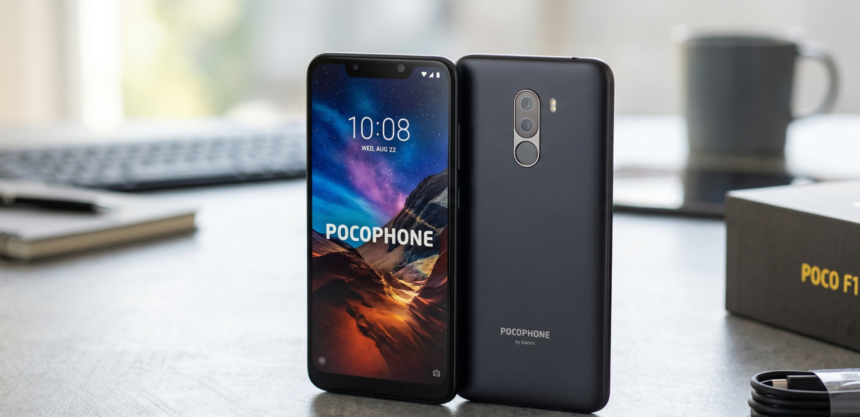
The Poco F1 remains a historic milestone in the Indian smartphone market, originally launching as a flagship killer that disrupted pricing norms. A recent unboxing of a sealed unit eight years later confirms its legendary status, featuring the powerful Snapdragon 845 chipset, liquid cooling technology, and a massive 4,000 mAh battery.
The resurgence of interest in the Poco F1 stems from a nostalgic yet practical appreciation for hardware that truly challenged the status quo. When you choose to invest in a legacy device or look for its modern equivalent, you are buying into a philosophy of raw power over unnecessary aesthetic fluff. This device was the first to democratize high-end processing, making the dream of owning a flagship-grade engine accessible to the masses without the typical 40,000 rupee price tag.
Pros and Cons of the Legend
The Poco F1 with 845 Snapdragon offers a dual-edged sword of classic reliability and aged hardware limitations that define its current market position. On the positive side, the integration of LiquidCool technology ensures that the Poco F1 with 845 Snapdragon maintains thermal efficiency during intense tasks, a feature that was once exclusive to expensive gaming rigs. However, the polycarbonate build might feel dated to those accustomed to modern glass sandwiches, even though it provides superior durability against accidental drops.
Another significant advantage of the Poco F1 with 845 Snapdragon is its incredible developer community support and open-source kernel history. This allows users to flash the latest custom ROMs, keeping the software experience fresh even years after official updates have ceased. Conversely, the massive notch at the top of the display, while housing a secure IR face unlock system, might appear intrusive compared to the sleek punch-hole designs seen in contemporary 2026 mid-range smartphones.
Key Specifications Table
| Feature | Specification Details |
| Processor | Qualcomm Snapdragon 845 (Octa-core) |
| Cooling | LiquidCool Technology (Vapor Chamber) |
| Display | 6.18-inch IPS LCD, Gorilla Glass 3 |
| Battery | 4,000 mAh with Quick Charge 3.0 |
| Biometrics | Infrared (IR) Face Unlock & Rear Fingerprint |
| Audio | Stereo Speakers & 3.5mm Headphone Jack |
Deep Dive: Battery, Camera, and Display Logic
The infrastructure of the Poco F1 was built on the logic of utility over vanity, starting with its robust 4,000 mAh battery. At the time of its release, this capacity was significantly larger than most flagship competitors, ensuring that the Poco could actually sustain its high-performance processor for a full day of heavy usage. For more insights into how legacy devices compare to the latest 2026 flagships, you can visit Savitimes.com for expert comparisons.
In terms of visual output, the Poco features a 6.18-inch display that remains surprisingly bright and vivid for an LCD panel. Protected by Gorilla Glass 3, the screen on the Poco F1 offers a level of scratch resistance that has stood the test of time, proving that durable materials are just as important as pixel density.
The camera system of the Poco F1 with 845 Snapdragon was designed to evolve through software, a testament to the versatility of its internal hardware. According to industry analysis by Reuters, the shift toward software-defined hardware capabilities started with pioneers like this, ensuring that the Poco F1 stayed relevant in mobile photography for years.
Frequently Asked Questions
Is the Poco F1 still usable in 2026?
Yes, the Poco F1 with 845 Snapdragon remains functional for daily tasks and light gaming, especially if equipped with a custom ROM for updated security patches.
Does the Poco F1 support 5G networks?
No, the Poco F1 with 845 Snapdragon is limited to 4G+ carrier aggregation, which still offers respectable speeds but cannot connect to 5G infrastructure.
What made the Poco F1 a “cult” phone?
The Poco F1 with 845 Snapdragon earned its cult status by offering a flagship processor and liquid cooling at nearly one-third the price of competing premium smartphones.